

BATLEY TRUST: Listening Hub

“We chose GEC because it offered something no one else did.”
Sam Vickers, CEO
Batley Trust (Listening Hub)
Listening Hubs are our best practice LAs, Trusts and schools. This case study has been written by Amy Wilby, Inclusion Champion at Batley Multi Academy Trust. It captures how the Trust has moved beyond intention-led inclusion to evidence-informed action, using listening as a catalyst for change. Through their ongoing work with the GEC, Amy reflects on what it really means to hear every voice—and how that insight is now shaping a more authentic, representative experience for every learner.
Context
We are a trust family of schools who firmly believe that every young person, regardless of their background or starting point deserves a first class education coupled with high-quality care, guidance and support. Our schools sit at the very heart of our community, all geographically linked, each being a mere 5 minute drive from the other.
Our family of schools covers the full age range from 2 year old provision through to post 16, plus our brilliant Yorkshire Rose Teaching Partnership provides excellent ITT, ECT and NPQ training, as well as leadership training programmes for our associate staff.
We see learning as a lifelong journey for all of us, holistic education being the key to unlocking an individual’s true potential and ultimately building a stronger local economy, resulting in a stronger community. Community makes us, and the unity in community is key.
Our trust mission, vision and values are shared across our family of schools, and we believe a great trust is based on collaboration for collective efficacy. All our schools are aligned to the trust’s mission, vision and values, but they are each unique as well. So instead of clones in a family, our schools are like siblings in a family.

“The GEC Inclusion Roadmap is accessible to everyone, well crafted and very highly quality, plus the Champion Hub is continually being developed and expanded.”
Amy Wilby, Inclusion Champion
Batley Trust (Listening Hub)
Why listening mattered here: What wasn’t being heard?
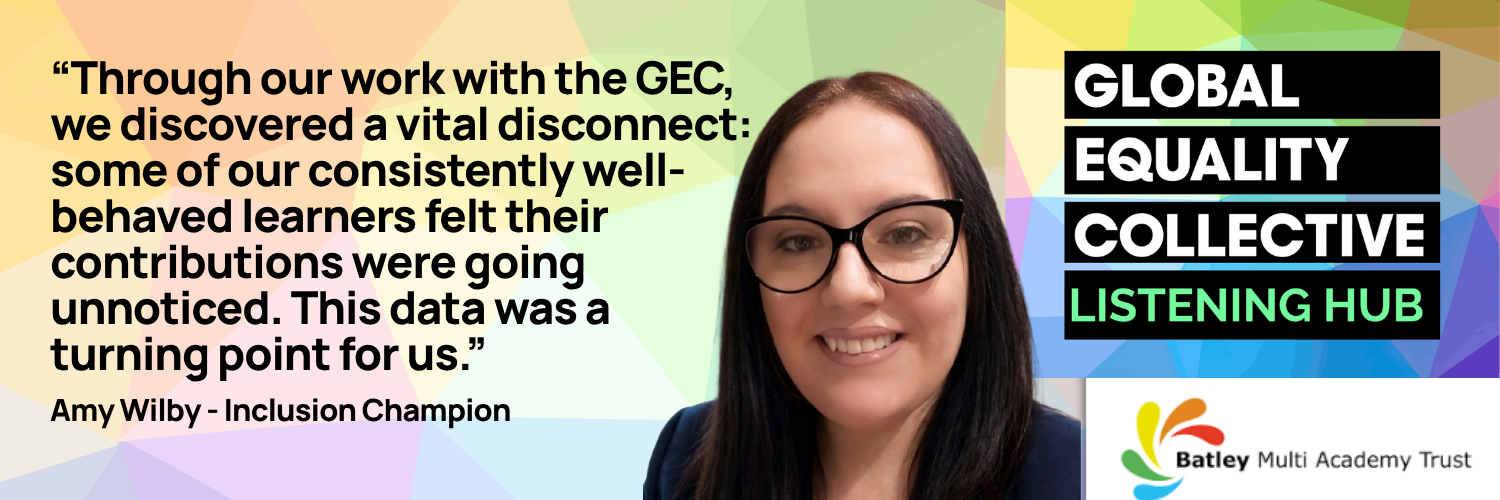
“Inclusion has always been our heartbeat, but we knew there were stories we weren’t yet hearing. Through our work with the GEC, we discovered a vital disconnect: some of our consistently well-behaved learners felt their contributions were going unnoticed. This data was a turning point for us.
It allowed us to shift our focus, ensuring that
belonging isn’t just about support where there is struggle,
but about celebrating and seeing every learner who walks our halls.”
Whose experiences were missing, marginalised or misunderstood?
“We pride ourselves on belonging, but the data from the GEC gave us a vital reality check. Our learners told us clearly that the national curriculum didn’t always reflect their lives, and that their cultural stories often felt incomplete or framed through a lens of struggle. We believe our learners deserve to see themselves as the heroes of their own histories. This feedback has become the catalyst for a deeper, more joyful representation across our Trust, moving beyond ‘missing stories’; to a curriculum that honors the full breadth of our community’s identity.
What prompted the organisation to pause and listen differently?
We’ve always championed inclusivity, but our work with the GEC has taken that commitment to a deeper level. Their insights gave us the tools to move from broad goals to precise action, identifying specific areas where we can better support our diverse learner groups. For our Trust, authenticity means looking honestly at the data so we can bridge gaps and ensure no learner is left behind.”
“Some of our consistently well-behaved learners
felt their contributions
were going unnoticed.”
Who was listened to?
● Students / learners
● Staff
“To ensure every voice was shared with confidence, participation was entirely voluntary and centered on learner agency. We prioritised total anonymity, capturing demographic insights and honest opinions without ever attaching them to individual names. When it came to our focus groups, creating a safe space was essential; learners were supported by staff they knew and trusted, ensuring they felt safe, seen, and heard throughout the process.”

“The surveys are well crafted, detailed and thorough and has provided a strong baseline for us to shape and build our trust wide EEDI strategy.”
Amy Wilby, Inclusion Champion
Batley Trust (Listening Hub)
How listening was done: What methods were used?
“Every question we asked and every conversation we held was built on a foundation of shared voice and mutual respect. Before we began, we ensured every participant understood the ‘why’ behind our work, connecting their personal insights to the meaningful change we want to see. This wasn’t just about collecting data; it was about gathering recommendations and empowering our community to help shape the future of our Trust.”
“We believed a broad and diverse curriculum meant our learners felt seen
—but the data showed us
that intention does not always equal impact.”
What was heard: What insights emerged that leaders didn’t expect?
“We didn’t expect to have such widespread participation, over 2000 voices heard!“
What challenged assumptions?
We have always been intentional about offering a broad and diverse curriculum, assuming that this breadth naturally meant our learners felt seen. However, our work with the GEC provided a powerful reality check: intention does not always equal impact.”
What changed because of listening
“Triangulating our data has allowed us to turn ‘opinions’ into ‘action’.”
“Each school in our Trust now holds an individual report featuring clear, evidence-based action points. This ensures our journey toward authentic inclusion is consistent across the Trust, yet deeply personal to the unique needs of every school community.”
“This wasn’t just about collecting data;
it was about empowering
our community to help shape the future of our Trust.”
What happened next
To turn our findings into a living reality, we built a framework that balances collective standards with local autonomy.
By providing a template of clear priorities, we empowered each school to develop its own individualised action plan.
As a Trust of siblings, not clones, we recognise that a ‘one-size-fits-all’ approach would undermine the very authenticity we seek. Each of our schools can now build its own distinct roadmap, ensuring that the work of belonging is rooted in the specific lived experiences of their own learners and staff.
What this Listening Hub is listening to now?
Now that we are adding missing stories, how are we ensuring they are woven into the core narrative rather than treated as ‘add-ons’ or ‘special months’? How can we involve the learners who felt ‘unseen’' in the actual redesign of the units they study?
Thank you Amy!
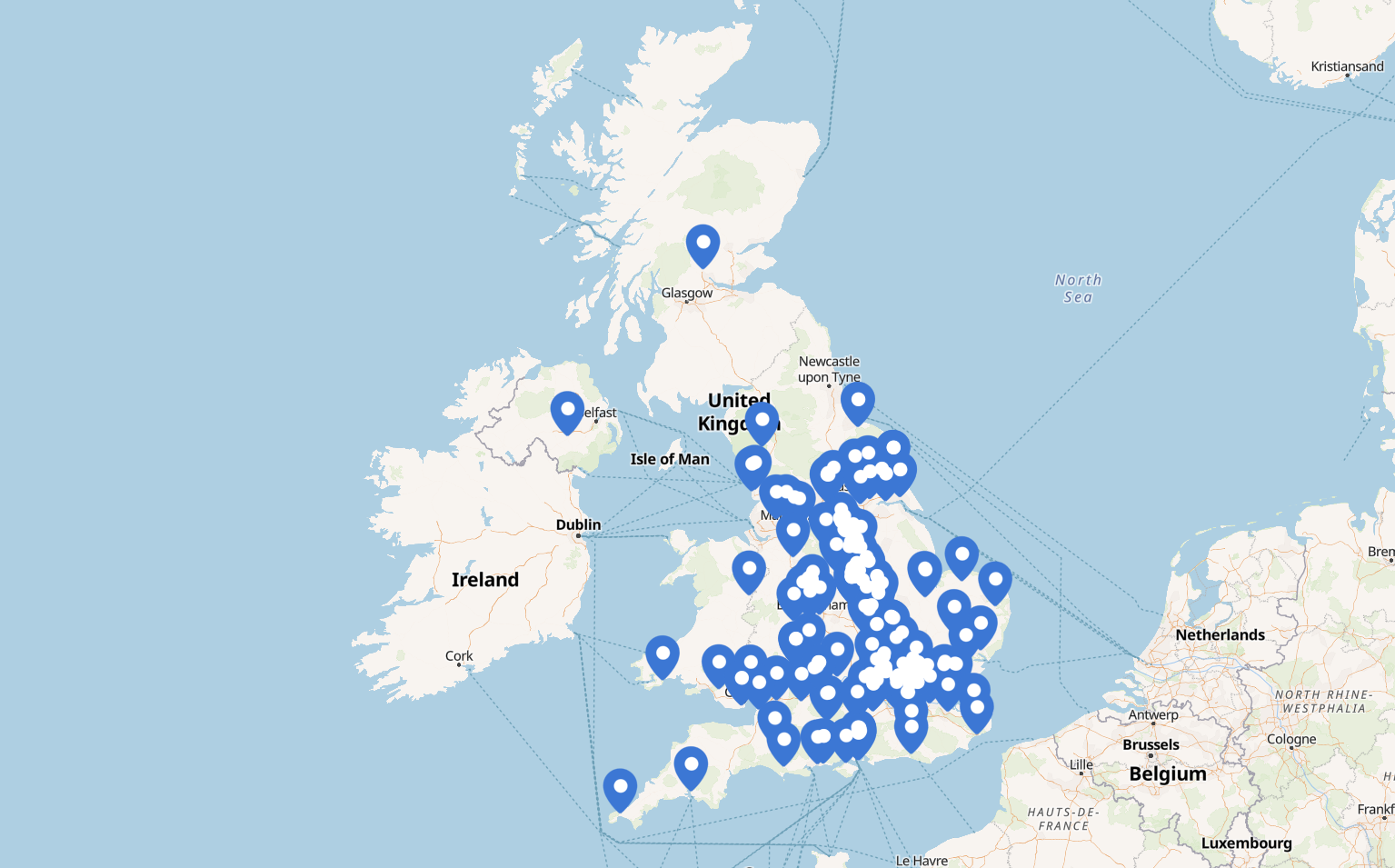
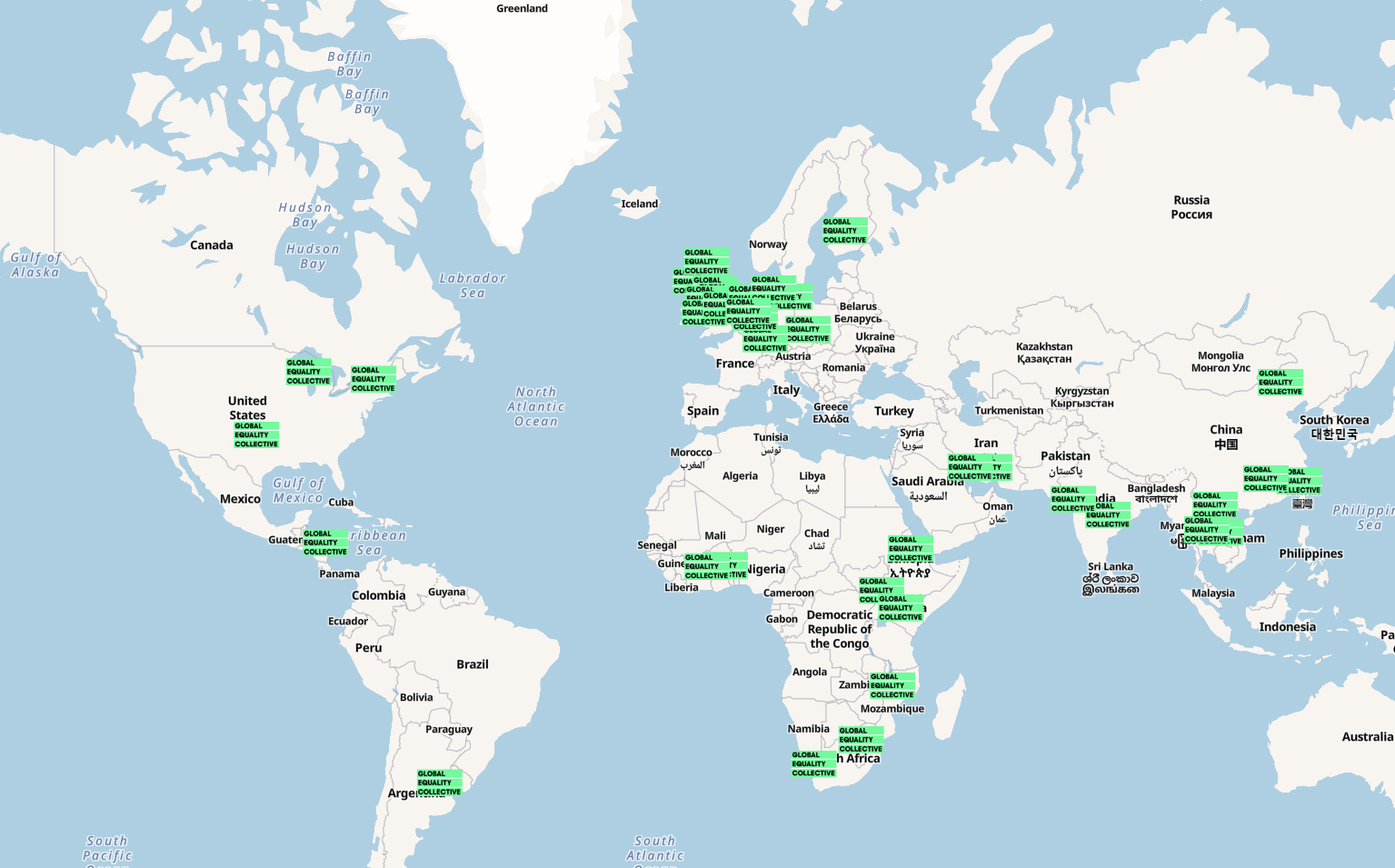
Did you know? We have a huge network of Inclusion Champions, both in the UK and across our 30 countries. We encourage them to get involved with our networks and projects. In a recent blog for Amy explored the impact of cultural capital on the curriculum, which we shared both in our GEC Platform and here on our website. Read the full blog “Privilege, Knowledge, and Access: Navigating Education Through Cultural Capital”.
And if you want to learn more, just get in touch or click the buttons to learn about our
GEC Platform or meet more of our schools creating Inclusion Champions in every classroom!