The Schools & Academies Show (#SAAShow): My Thoughts and Experiences as a GEC Intern and PhD Researcher
A blog about the Schools & Academies Show experiences and thoughts, written by GEC Intern and PhD Researcher, Swane Parchment (Kingston University)
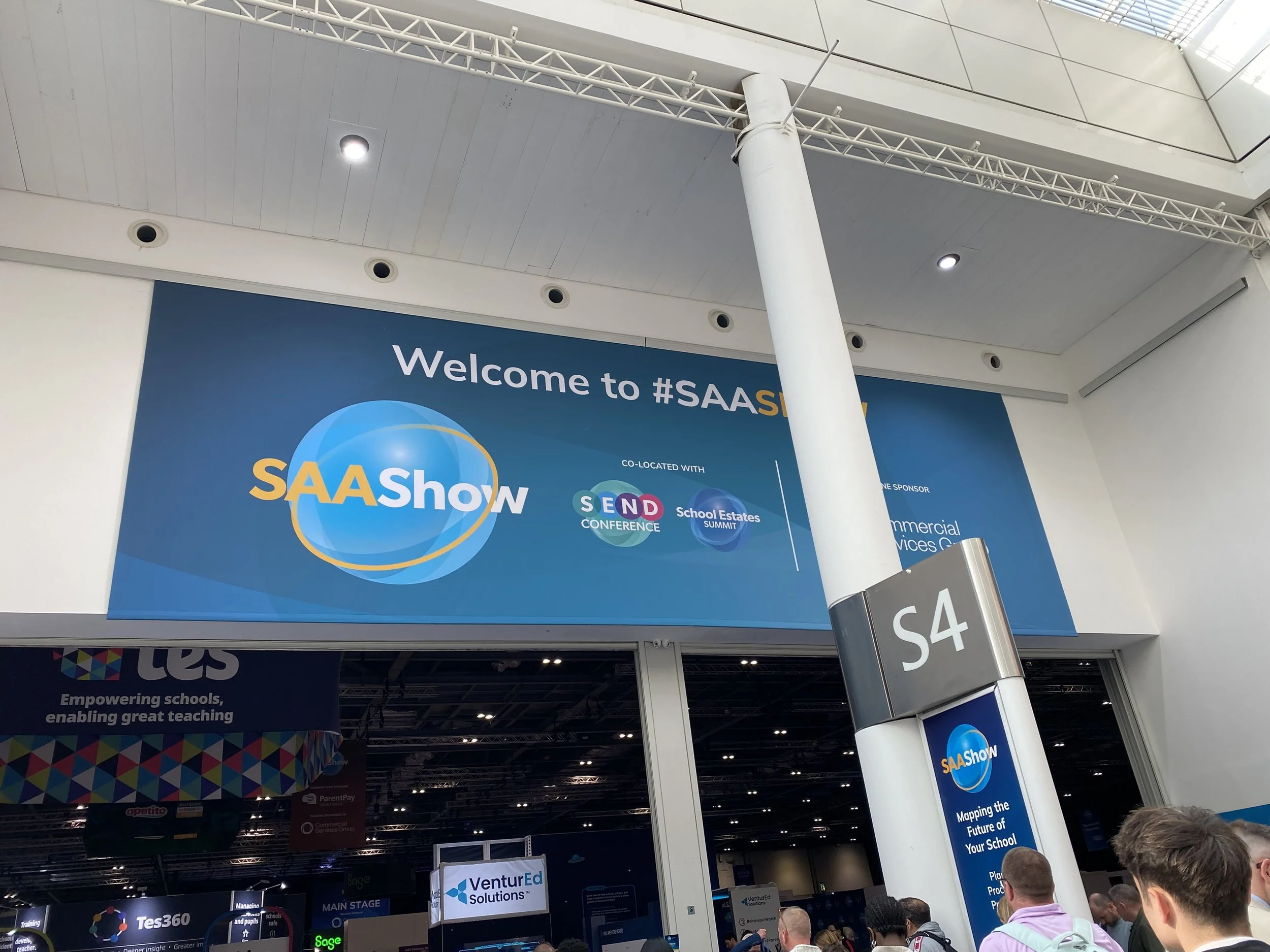
The entrance to the Schools & Academies Show (#SAAShow) at the Excel Centre in London.
The Schools & Academies Show (SAAShow) is an event with professionals within the education community such as school leaders, education professionals, business managers and governors. The SAAShow is a co-located event with the SEND Conference and the School Estates Summit. The largest event for the education community space to connect, collaborate, share insights, solutions and navigate the challenges facing education. Assisting the Global Equality Collective (GEC), I attended the London show which was held at the Excel Centre in London on Thursday 7th May 2026 from 9am – 4.30pm.
This was my first time experiencing an event such as the Schools & Academies Show (SAAShow). One part of my experience was the size of the event. The SAAShow is said to be the largest event of this kind and that was clear. I attended the event as a Global Equality Collective (GEC) researcher, a member of the GEC team who was a partner, speaker and an exhibitor. This meant getting the opportunity to interact and connect with a considerable number, approximately 3,000 attendees, of individuals from a range of professions within education.
As PhD student, we are encouraged to network. While networking is great in practice, and I have received valuable training from my PhD programme, in actuality it can be intimidating. I suspect this is not a unique thought or experience. However, attending the SAAShow was a beneficial experience and a great chance provided by GEC to network and speak about the GEC and my research with people outside academia. That is, the environment created by the SAAShow, and my fellow GEC team members, encourages and provides the space to connect, share knowledge and experience with those in the education community.
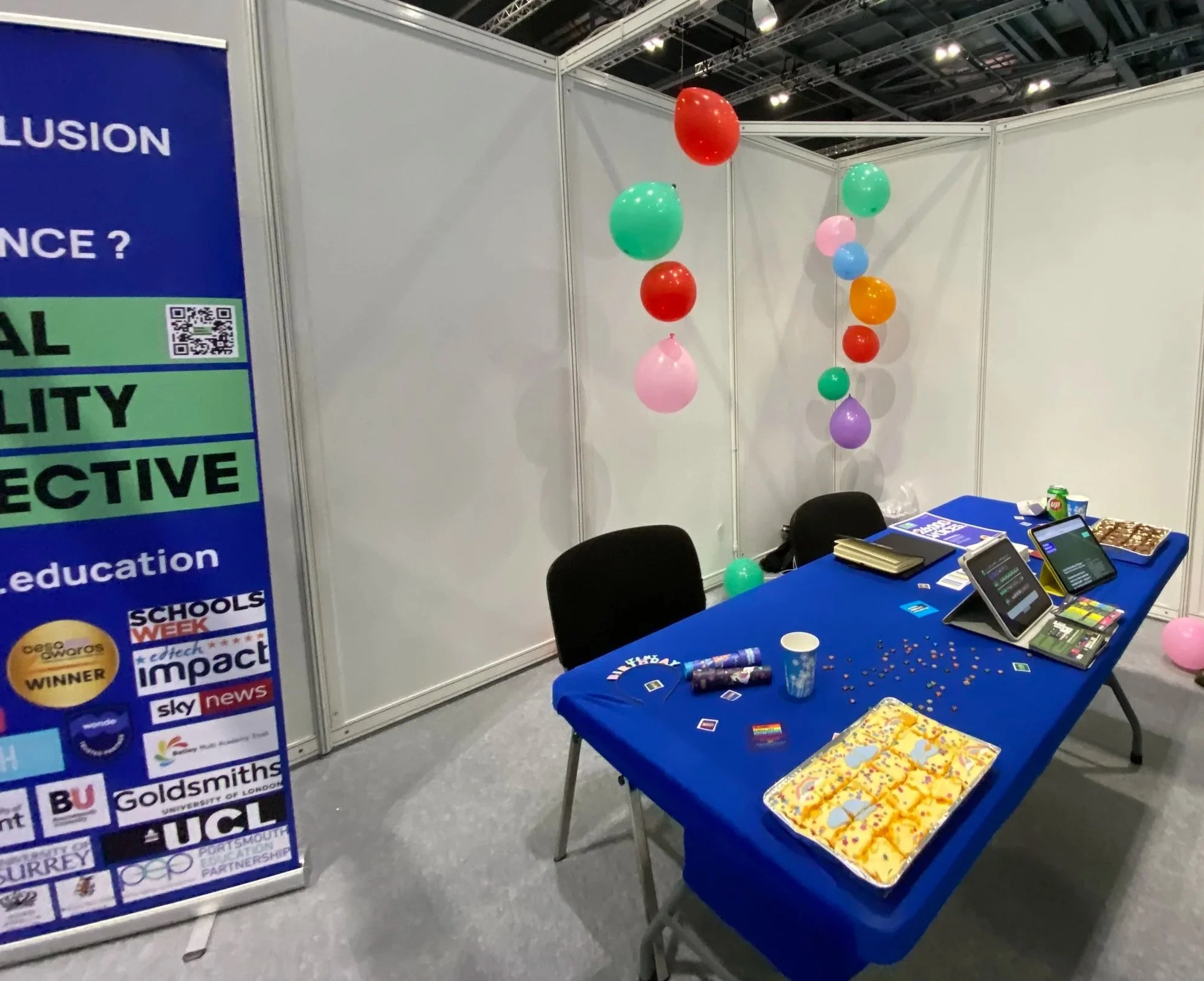
Our stand at the Schools & Academies Show (#SASShow).
This was an invaluable experience, participating and attending a conference that was within education and not academia. The SAAShow has accessibility and inclusion as a priority, this was made evident with the organisation of the event. One example is that there were live captions running of those speaking for all of the sessions. Another is the speakers and attendees could wear headphones if they chose. The headphones were on every seat so the participants of the sessions could either listen via the microphone and speaker or directly via the headphones. As the host of the EdTech Theatre, our founding CEO, Dr Nicole Ponsford, signposted this to all audiences and speakers. The event with the support of my fellow GEC Team members was welcoming and supportive which encouraged communication and interaction with attendees.
This was also the first time for the GEC experiencing the SAAShow as an exhibitor. The GEC helps schools, trusts and local authorities to see and capture what their existing inclusion data misses. Turning students and staff voice into actionable insight to strengthen belonging and inclusion. Working as an exhibitor for the GEC, I was able to interact with those who could benefit from the GEC.
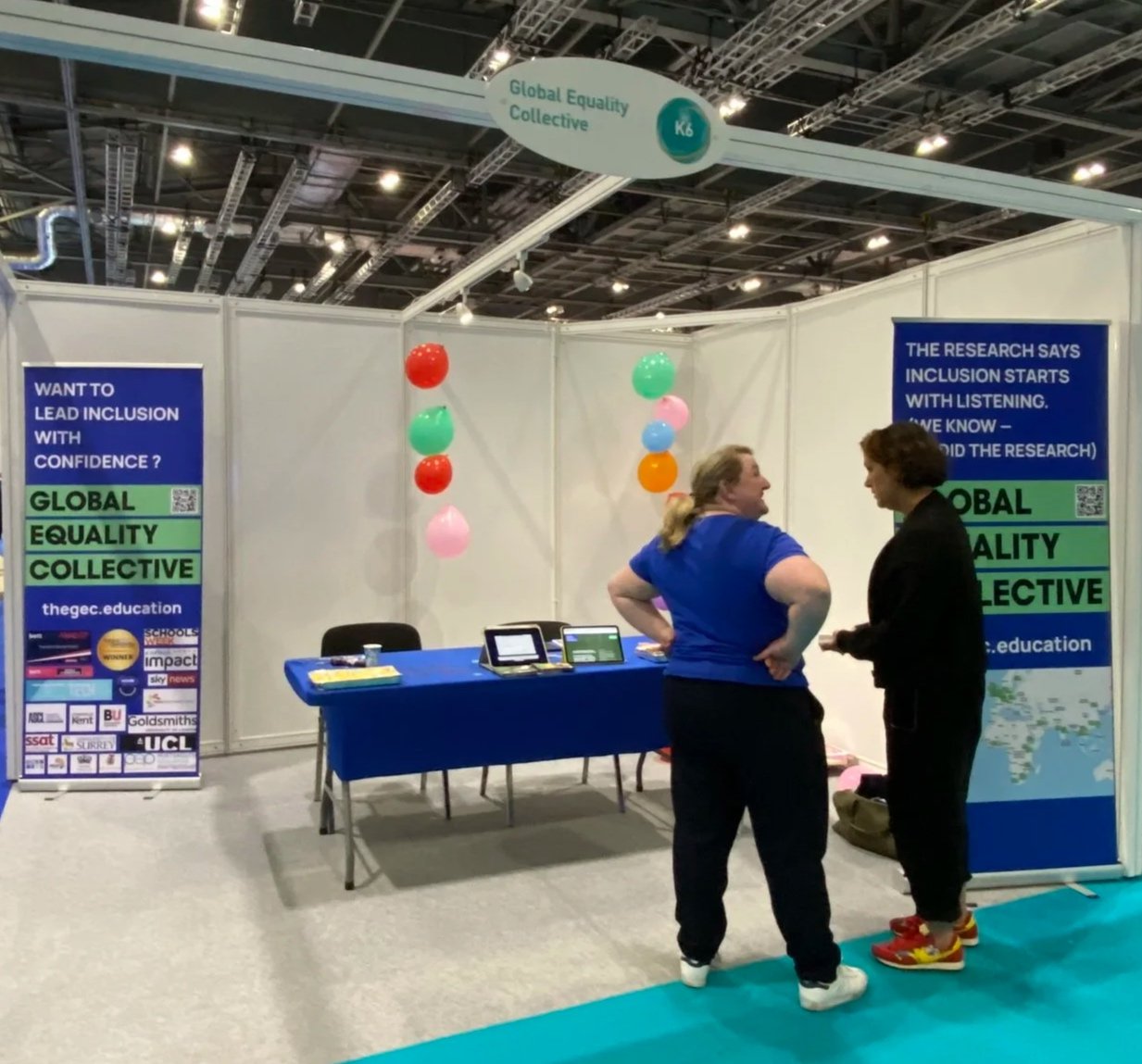
Our stand at the Schools & Academies Show (#SASShow) with Our Chief Operations Officer Gemma Hubert and our Head of Commercials Francesca Roberts.
Lessons learned from the Schools & Academies Show (SAAShow)?
The SAAShow includes Continuing Professional Development (CPD) sessions which were delivered by experts within the sectors on SEND, estates, EdTech, leadership and finance. This was an immersive experience, learning more about education, the challenges, advancements and important topics. The SAAShow was an opportunity to learn from a wide range of experts in their sectors about real challenges and issues being faced by educational institutions, particularly students.
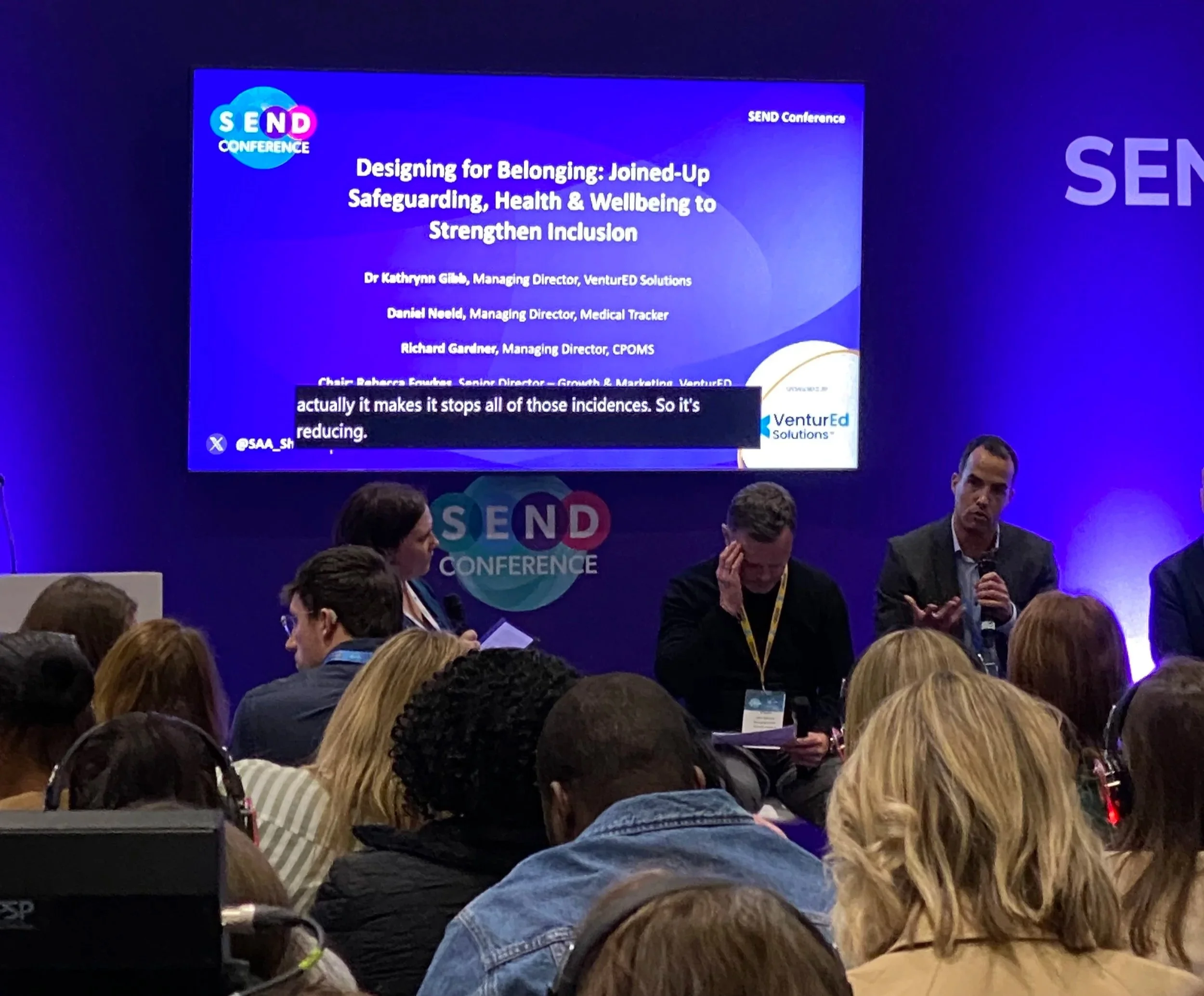
The Designing for Belonging: Joined-up Safeguarding, Health & Wellbeing to Strengthen Inclusion session at the SEND Conference co-located at the Schools & Academic Show.
The sessions enabled learning about these aspects broadly but how they are relevant to students and families on a more individual level. For example, the sessions chaired by our founding CEO, Dr Nicole Ponsford, at the EdTech Theatre focusing on digital strategy, AI, technology, software and IT infrastructure. For example, the session Transform and Roll out – How do you Make Digital Transformation as Effective and Smooth as Possible? This session was about making digital transformation work in real settings.
The session was useful in the discussion about the decisions schools are making when it comes to digital transformation. With the rise of the importance of technology in education, these sessions felt timely for students, staff and families and schools, trusts and local authorities.
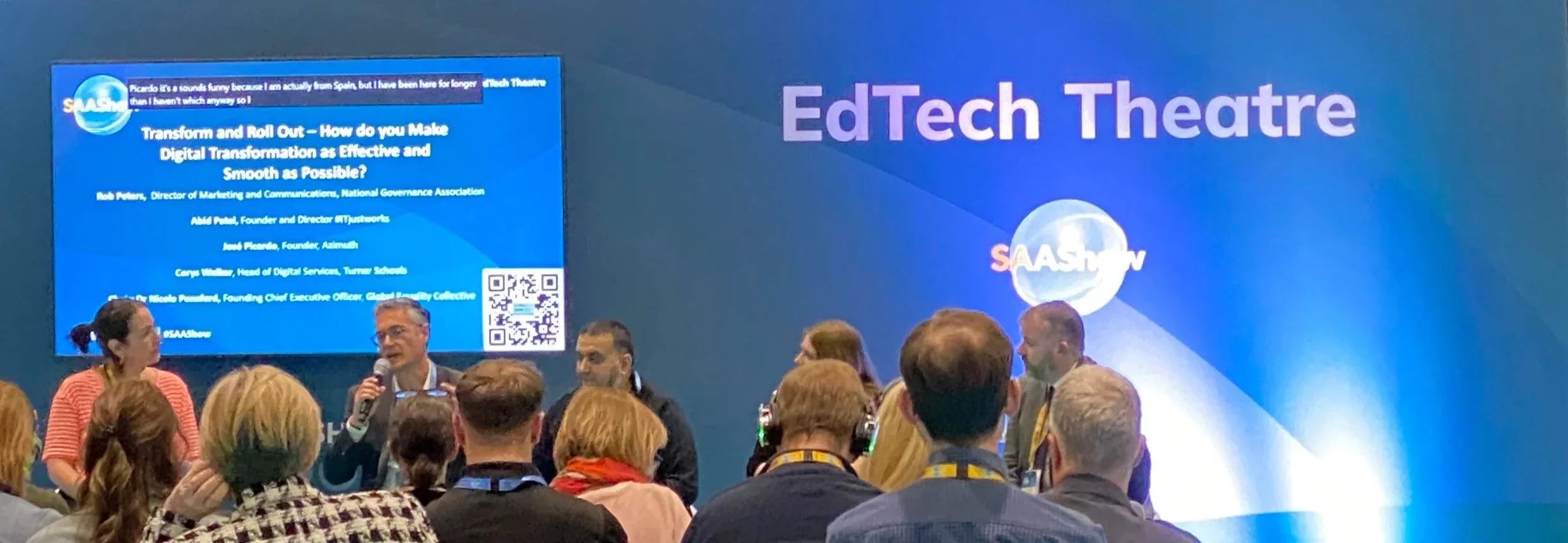
Our founding CEO, Dr Nicole Ponsford chairing the session Transform and Roll out - How do you Make Digital Transformation as Effective and Smooth as Possible? at the EdTech Theatre.
Another session was The Schools White Paper and What it Means for the Sector in the SEND Theatre. This was interesting, hearing the conversation being had around this. Hearing the concerns of those impacted, students and families, through the professionals who interact with them day-to-day in the real world felt like seeing them represented although they were not there. A family support worker mentioned their worries in that the White Paper not listening to SEND families or understanding the problems they are facing. They mentioned that 70 families contacted them, panicking, since the White Paper was published.
This session also involved discussion surrounding inclusion in education. For example, when speaking of inclusion, the conversation involved speaking on the word not just being a ‘buzzword’, providing a clear definition of inclusion and including every child who may be different.
This session, along with the other sessions during the SAAShow, felt relevant, being an intern at the GEC as a challenge facing education.
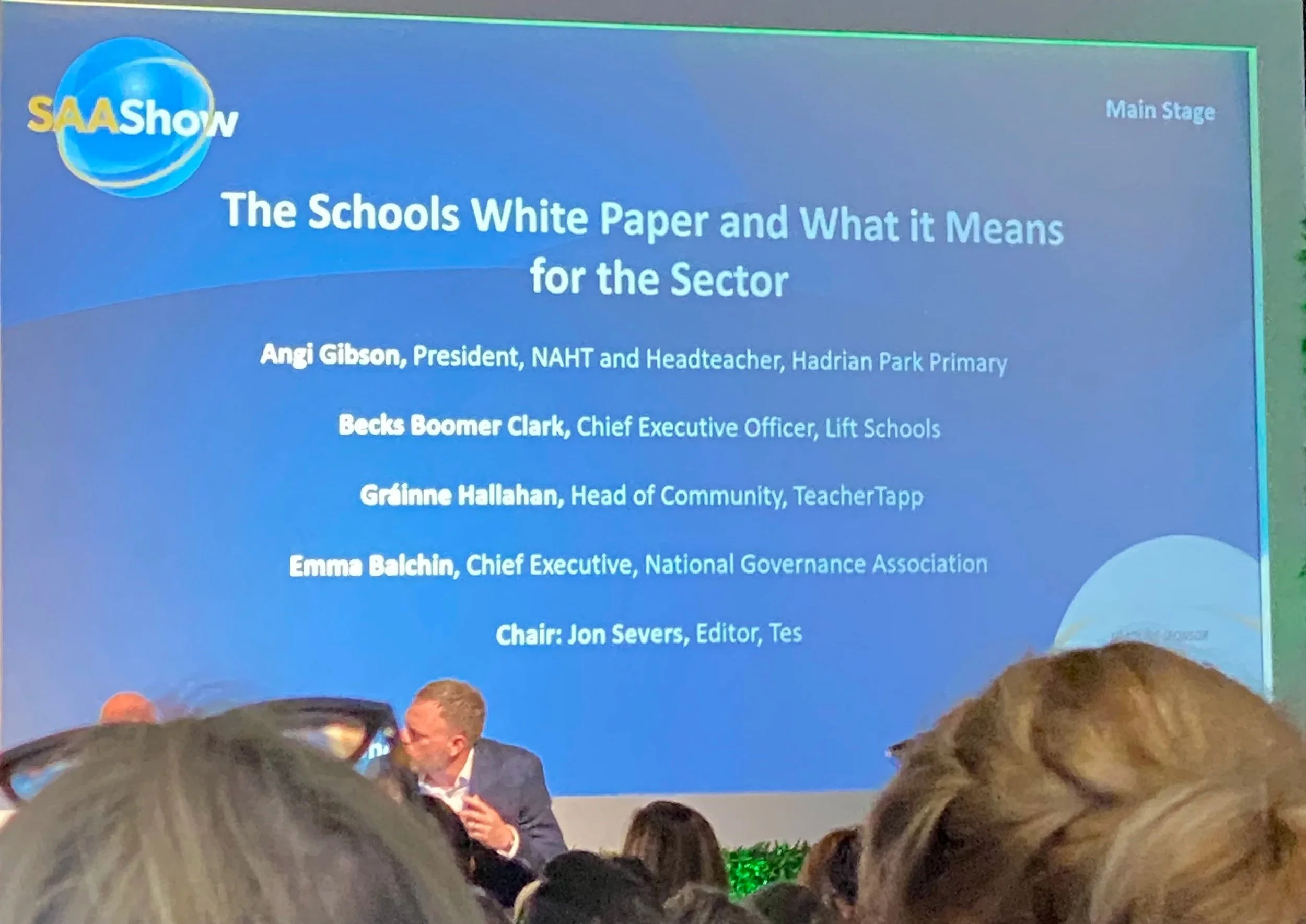
The session The Schools White Paper and What it Means for the Sector in the SEND Theatre.
The #SAAShow, My Experience and the GEC
The sessions at the #SAAShow felt informative but also conversational, focusing on practical and actionable improvements as well as addressing the challenges. The work of the GEC felt particularly relevant during these sessions, focusing on what is missing in schools, trusts and local authorities such as belonging and inclusion – aspects of these sessions and those who came to our stand spoke passionately about the needs the GEC can help them with.
The GEC can help with our GEC Platform where we use knowledge and lived experience, combining the surveys we have designed – co-developed with students, staff and leaders – with a wide range of CPD accredited materials and resources. We collect survey data that is intersectional and anonymised. The voices of students and staffs – who otherwise go unheard as discussed at the #SAAShow – are given a voice and representation. Through personalised evidence, we help schools, trusts and local authorities see how they can improve inclusion and belonging within their organisation with actionable change.
For example one of our case studies written by Amy Wilby, the Batley Multi Academy Trust Inclusion Champion. They wrote about their ongoing work with us at GEC and how with our help they are listening to the students/learners’ and staff voices. Amy reflected on the benefits of the Champion Hub for their academy and how with the help of GEC, all the stories of their learners were being told. Our data led to action. We worked with the Batley Multi-Academy Trust, producing an individual report with evidence-based action points working towards intersectional inclusion that empowered their students/learners and staff and for each school to develop its own individualised action plan. For the GEC, inclusion and belonging in education is not just a ‘buzzword’ but a core mission to turn intention for inclusion into evidence-informed action.